
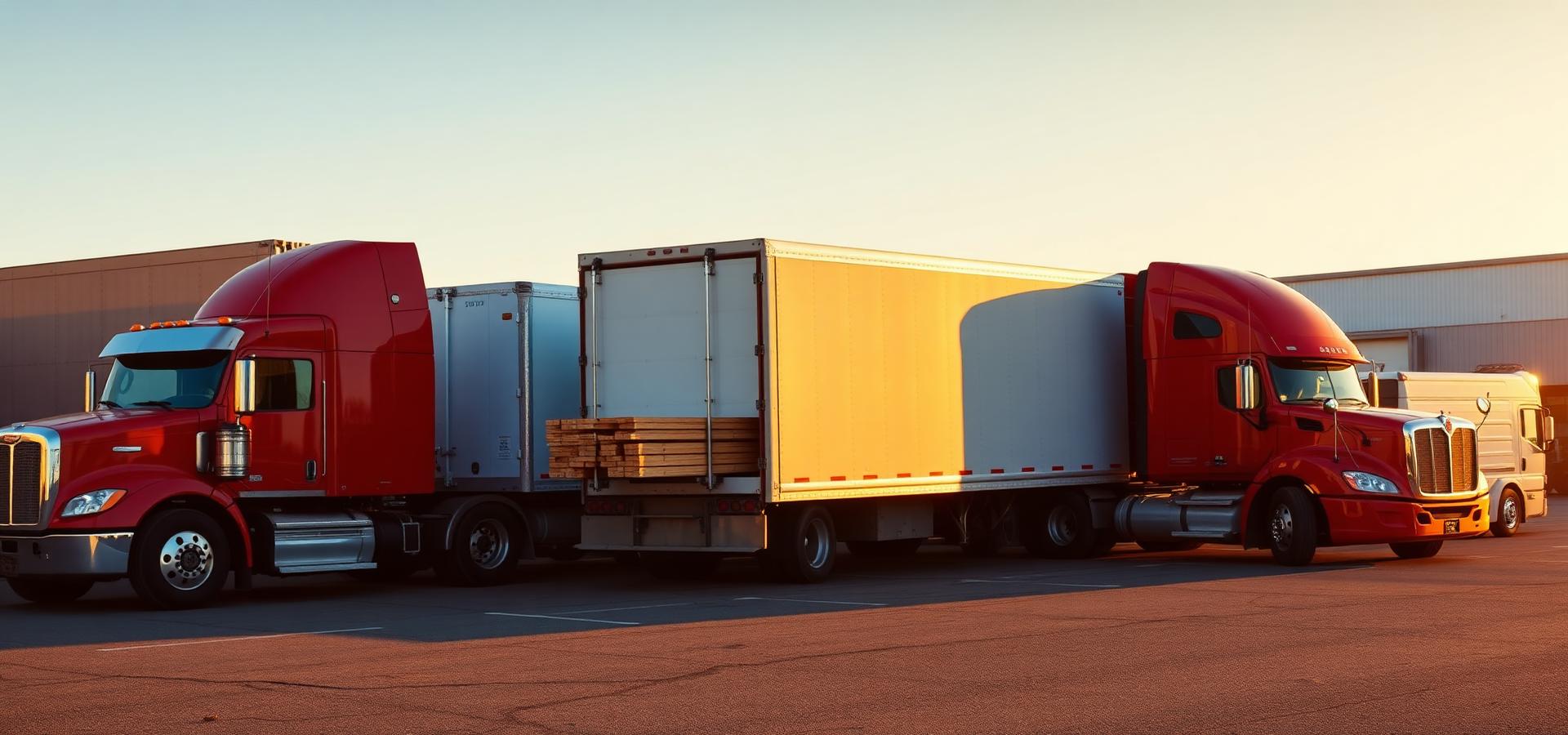
Lineup of commercial trucks and trailers at a freight yard at sunrise
Equipment

Equipment We Dispatch

We provide professional dispatch support for a variety of commercial vehicle and trailer types. Our dispatch process is customized around each carrier's equipment, preferred lanes, operating schedule, and business goals.

A dispatch process built around your equipment

Different equipment types come with different freight requirements, scheduling considerations, weight limitations, and broker expectations. A dry van rarely operates the same way as a flatbed or a reefer, and expedited vans follow a different rhythm than long-haul tractors.

TRUST WORTHY TRIPP LOGISTICS works with carriers to locate freight opportunities that are compatible with their equipment and operating preferences. Freight availability, rates, and load acceptance are always subject to market conditions and broker approval and cannot be guaranteed.

Equipment types

Equipment we support

  • Dry Van

    One of the most common trailer types used for general freight.

    Typical Freight

    • Consumer goods
    • Retail merchandise
    • Packaged food
    • Paper products
    • Manufactured products

    Operating Considerations

    • Dock appointments
    • Detention
    • Weight limits
    • Seal requirements
  • Reefer

    Temperature-controlled trailer operations.

    Typical Freight

    • Frozen food
    • Fresh produce
    • Pharmaceuticals
    • Dairy
    • Temperature-sensitive products

    Operating Considerations

    • Temperature settings
    • Washouts
    • Fuel monitoring
    • Appointment windows
  • Flatbed

    Open-deck trailers used for oversized or irregular freight.

    Typical Freight

    • Steel
    • Lumber
    • Machinery
    • Construction materials

    Operating Considerations

    • Securement
    • Tarping
    • Chains
    • Binders
    • Height restrictions
  • Step Deck

    Designed for taller freight requiring additional clearance.

    Typical Freight

    • Equipment
    • Construction machinery
    • Industrial components

    Operating Considerations

    • Height restrictions
    • Securement
    • Oversized permits when applicable
  • Power Only

    Power unit pulls broker or shipper supplied trailers.

    Typical Freight

    • Drop trailers
    • Trailer repositioning
    • Dedicated trailer moves

    Operating Considerations

    • Trailer inspections
    • Interchange agreements
    • Trailer condition
  • Hotshot

    Smaller commercial trailers designed for expedited freight.

    Typical Freight

    • Industrial parts
    • Construction supplies
    • Equipment
    • Urgent deliveries

    Operating Considerations

    • Weight limits
    • Securement
    • DOT compliance
  • Box Truck

    Enclosed straight trucks commonly used for local and regional freight.

    Typical Freight

    • Furniture
    • Retail
    • Medical supplies
    • Office equipment

    Operating Considerations

    • Liftgate requirements
    • Residential deliveries
    • Appointment scheduling
  • Cargo Van

    Used primarily for expedited small freight.

    Typical Freight

    • Small parcels
    • Medical deliveries
    • Automotive parts
    • Emergency shipments

    Operating Considerations

    • Weight limits
    • Expedited schedules
    • Urban deliveries
  • Sprinter Van

    Ideal for expedited commercial freight.

    Typical Freight

    • Small pallets
    • Medical freight
    • Auto parts
    • Industrial supplies

    Operating Considerations

    • Time-sensitive deliveries
    • Weight restrictions
    • Multiple-stop routing
  • Fleet Operations

    Support for companies operating multiple commercial vehicles.

    Available Services

    • Dispatcher assignment
    • Fleet coordination
    • Driver communication
    • Load tracking
    • Administrative support

    Operating Considerations

    • Multiple driver schedules
    • Consistent communication
    • Centralized paperwork
Onboarding

What we need from you

During onboarding we gather the details below to help match carriers with compatible freight opportunities.

Safety & compliance

Compliance topics carriers should know

Common compliance areas that apply to motor carriers operating commercial equipment.

  • FMCSA Compliance

    Federal Motor Carrier Safety Administration regulations that apply to interstate motor carriers.

  • Insurance Requirements

    Auto liability, cargo, and other coverages typically required by brokers and shippers.

  • Hours of Service

    Federal driving and duty-hour rules that govern driver schedules and rest requirements.

  • Vehicle Inspections

    Pre-trip, post-trip, and periodic inspections used to keep equipment road-ready.

  • Cargo Securement

    General cargo securement expectations that vary by trailer type and commodity.

  • Licensing

    CDL classifications and endorsements associated with different equipment and freight types.

  • Medical Certification

    DOT medical examiner certification generally required for commercial drivers.

This information is provided for general educational purposes only and is not legal, insurance, or regulatory advice. Carriers should consult qualified professionals and official regulatory sources for guidance specific to their operation.

FAQ

Frequent questions

Tell Us About Your Equipment

Complete your carrier profile so our team can better understand your equipment and operating preferences.